
When Growth Starts to Slow You Down
Fixing operational friction in scaling companies.
As companies grow, coordination becomes harder.
Software becomes fragile.
Decision-making slows.
Founders and senior leaders get pulled back into daily issues.
It doesn't look like a crisis. It feels like constant friction.
We work with leadership teams to diagnose and correct the operating issues behind that friction — often starting with a specific, contained problem.

The Reality Behind the Friction
Most mid-sized companies don't struggle because of talent or effort.
They struggle because the way the business was originally set up no longer fits its current size.
Over time:
- Decision authority blurs
- Teams overlap
- Systems evolve without clear ownership
- Workarounds become permanent
Hiring more people doesn't solve it.
Adding tools rarely solves it.
The operating system needs adjustment.

Where We Typically Begin
We usually enter through something concrete:
- "Our software is becoming a liability."
- "Delivery has slowed and we don't know why."
- "Marketing and operations are misaligned."
- "I'm back in daily firefighting."
We assess the issue directly.
If it's local, we fix it.
If it's connected to deeper operating constraints, we make that visible.
No transformation theater.
No abstract programs.
How We Work
Most engagements begin with a specific operational problem.
- The product experience is deteriorating or losing customers
- Software systems are becoming fragile
- Delivery has slowed and no one can explain why
- Leadership is pulled into constant firefighting
We start there.
Phase 1 — Focused Assessment (6–10 weeks)
We examine how the system actually operates.
- How decisions move through the organization
- Where work accumulates or stalls
- How product, engineering, and operations interact
- Where systems or processes constrain execution
We produce a clear diagnosis of the underlying issues, identify immediate improvements where possible, and outline a contained roadmap for the next steps.
This phase reduces uncertainty quickly.
Phase 2 — Structural Intervention (when needed)
If the issue traces back to deeper operating constraints, we address them directly.
Typical interventions include:
- Clarifying ownership and decision rights
- Redesigning delivery mechanics
- Stabilizing critical systems
- Simplifying cross-team dependencies
All work happens inside live operations.
The business continues running.
Integrated Capability
Most firms operate in one lane:
- Strategy
- Product design
- Technology delivery
- Process training
We operate across the boundaries where these areas intersect — because that's often where problems originate.
Our work combines:
- Technical architecture expertise
- Delivery model design
- Organizational clarity
- Commercial alignment
This integration prevents isolated fixes that create new problems elsewhere.

Selected Works
Details are limited for confidentiality. The emphasis is on operational effect.
Healthcare Processing & Accreditation Systems
Designed and operated large-scale prescription processing and evaluation systems, including ingestion, matching, and optimization workflows.
Result:
Processing scaled without increasing manual reconciliation or operational strain.
Membership & Consumer Platforms
Led the end-to-end build of bespoke membership ecosystems — backend systems, web platforms, and mobile applications.
Result:
Reduced coordination overhead and stabilized delivery as usage increased.
Legal & Publishing Systems
Rebuilt legacy data platforms into production-grade pipelines for ingestion, search, and alerting.
Result:
Removed escalation bottlenecks between product, data, and editorial teams. Delivery became predictable.

Automation & AI (Used Carefully)
Automation and AI amplify whatever structure they sit on.
We introduce intelligent systems only when the operational foundation can support them. Often that means clarifying processes and ownership first.
Used correctly, automation becomes leverage — not pressure.
Leadership Team

András Bodis — Founder
András works with leadership teams when growth starts to feel heavier than it should.
Over two decades, he has led platform rebuilds, delivery restructures, and operational resets in complex and regulated environments.
His focus is practical: understand how the company is actually operating, identify the constraints that matter, and implement changes that reduce friction without destabilizing operations.
Engagements are small, senior-led, and implementation-focused.

Miriam Fernández — VP Sales
Miriam works with leadership teams at the beginning of engagements to ensure the problem is clearly defined and the scope reflects operational reality.
Her role is to maintain alignment between commercial expectations and execution — so what is agreed at the start survives under operational pressure.
She has worked in complex and highly regulated environments where initiatives often fail because ownership, incentives, or decision rights are unclear.
Alongside her work at Novare, she teaches in the Master in Business Analytics & Management at Universidad Europea.
Contact
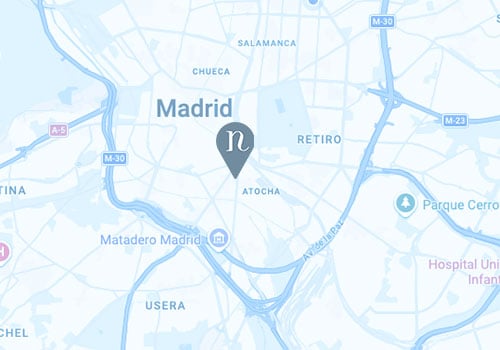
Office
Paseo de las Delicias, 30, 2da PlantaMadrid, 28045
Phone:
+34 655 01 63 99
Email:
info@novare.digital